














On Page Navigation

A TeamViewer Alternative for Support Teams Tired of Buying a Year at a Time

TeamViewer sells by the year, renews itself unless you cancel a month ahead, and publishes no figure that survives loading its own pricing page. Managed Zoho Assist is three hundred dollars a month, and the Zoho Assist licence sits inside that on one invoice. We are well above what the cheap remote tools charge, and we get to that further down.
What TeamViewer costs, and why nobody outside their sales team can tell you
Annual terms, an automatic renewal, and not one dollar figure that survives loading the page
TeamViewer licenses the expert rather than the endpoint, so only the person giving support needs a seat. What it does not do is show you a price. The figures on the pricing page are drawn in by the browser after the fact, and on a plain load they are simply not there. What does render is the commercial shape. Billing is annual, there is no monthly option, and the term renews itself for another twelve months unless you cancel at least twenty eight days before it ends. Tensor, the enterprise tier, is quoted rather than listed, and its twenty four hour support depends on holding a service agreement rather than arriving with the tier.
Icon representing a price that never renders on the vendor own pricing page

The licence follows the technician, not the machine

TeamViewer licenses the expert. The people being helped need nothing bought for them, so a two person help desk supporting four hundred staff buys two seats. That is the right shape for a small support team and we are not going to argue with it. The number attached to those seats is the part you cannot look up.
Icon representing five separate add on modules each priced on its own meter

Five add on modules sit outside whatever the seat price turns out to be

Asset Management, Endpoint Protection, Device Monitoring, Assist AR Lite and Mobile Device Management are all sold on top, and they are metered on different things: endpoints for some, users for others, storage for another. If any of those is the reason TeamViewer is on your list, the seat price is not the number you would be paying, and neither is any figure a comparison article quotes at you.
Icon representing a twelve month term that renews on its own

The term renews itself, and the window to stop it is narrow

Billing is annual, there is no monthly option, and the agreement rolls into another twelve months automatically unless you give notice at least twenty eight days before the term ends. Miss that window and you own another year. Put the date in a calendar the day you sign, because nobody at TeamViewer is going to remind you and a renewal is not a cheap thing to undo.
One figure you can read, and one you have to ask for
A technician seat buys the software. It does not buy anybody to run it.
The gap here is not really the rate, and we cannot compare rates anyway because TeamViewer does not publish one. The gap is that whatever you end up paying, the work stays with you. TeamViewer hands you a very good remote access product and leaves the access policy, the unattended agent rollout, the technician provisioning and the connection to your help desk exactly where they were. We do that part, keep doing it, and put a named person behind it.

Cascadia

Zoho Assist configured around who may connect to what, unattended agents deployed on the machines you genuinely need to reach, technicians provisioned and removed as your team changes, and sessions wired into Zoho Desk so a support call leaves a record on the ticket rather than a note in somebody's inbox. Three hundred dollars a month, and the Zoho Assist licence is carried on our invoice rather than bought separately by you.

Without Cascadia

A price you cannot read until you ask for it, an annual term that renews on its own, five add on modules metered on three different units, and a support commitment that depends on which agreement you signed. Everything after signature is yours to set up and keep running.

Comparison

Cascadia vs TeamViewer
TeamViewer publishes no price that renders, so a rate against a rate is not available to anybody writing this page honestly. This table compares what each side is responsible for instead. Everything in the Cascadia column is included in Managed Zoho Assist at one flat monthly figure.

Someone sits with the people who actually take the support calls and turns how they work into access rules, groups and unattended agent coverage

Someone writes the access policy, decides which machines may be reached unattended, and tests what a real end user sees when a technician asks to connect

Technician access, agent coverage and session permissions reviewed every month against who joined, who left and which machines got rebuilt

A price that does not move when you add a technician, an add on module or four hundred more endpoints

The same named person every time, who configured your access rules and remembers why

One remote access standard the whole company works to, instead of three tools and a personal account somebody still uses

One monthly figure with no annual term, no automatic renewal and no notice window to miss

The ticket, the session, the notes and the customer record living in one system

An honest no on the first call if two technicians and a cheap seat licence really are all you need

Session reporting that joins the connection to the ticket and the customer without a connector in between

Generic logo representing a comparable provider.
TeamViewer

Where TeamViewer fits

If you have one or two technicians, a clear idea of who may connect where, and somebody in house who keeps that list tidy, TeamViewer is a strong product and it will cost you less than we do. It gets harder to recommend the moment nobody owns the access list, because the tool is not the thing that fails in that situation.
Cascadia Web Services logo

Cascadia Web Services

Where a seat licence stops being the thing that matters

We exist for the case where the remote session is one step in a support process that also raises tickets, tracks customers and has to show somebody who reached what, and nobody has the hours to wire that together.

Where TeamViewer is strong

Icon representing two decades of connection engineering across difficult networks
The connection itself is better engineered than anything we would build for you
Two decades of work has gone into getting a session through hostile firewalls, bad hotel wifi and locked down corporate networks, on more platforms than anyone else supports. When a connection is going to be difficult, theirs is the one that works. Zoho Assist is a competent product; it is not that product, and we are not going to pretend it is.
Icon representing add on modules for asset tracking, endpoint protection and device management
The add on catalogue reaches well past remote support
Asset Management, Endpoint Protection, Device Monitoring, Assist AR Lite and Mobile Device Management are all sold alongside it. If you want remote support, endpoint security and an asset register from one vendor on one contract, that is a real reason to buy TeamViewer. Zoho Assist does none of those things, and we are not going to pretend otherwise.
Icon representing a licence attached to the technician rather than the endpoint
Licensing the expert instead of the endpoint is genuinely the right model
Only the person giving support needs a licence. A two person help desk covering four hundred staff buys two seats, and nobody has to be excluded from support to hold the cost down. If that describes you, and somebody keeps the access list honest, TeamViewer is the cheaper answer and we would say so on the first call.
Icon representing a brand end users already recognise and will let onto their screen
It is the tool the person on the other end already recognises
TeamViewer has been the default remote support tool long enough that most people have seen the window before and will click accept without a phone call explaining what it is. That familiarity saves real minutes on every session with an unfamiliar customer, and it is not the sort of thing a feature table captures. It also does not tell you the tool is the one your business needs.
All of that is real, and if you have two technicians and somebody who keeps the access list current, TeamViewer is a better answer than anything we sell. What it is not is a standing answer to who can reach what, six month's after launch. That is a different job, and it is the one our Managed Zoho work is built around.

What three hundred a month covers when the software itself is not the problem

Icon representing one monthly figure covering the setup, the tuning and the licence
One number covering the build, the tuning, the licence and every change after it
Technician accounts, access groups, unattended agent deployment, session permissions, the Desk and CRM connections, and the Zoho Assist licence itself. Built once, then changed whenever your team, your machines or your customers change, with no ticket and no hourly rate.
Icon representing a flat monthly figure with no annual term behind it
No annual term behind it, so a bad quarter is not a year you already bought
Three hundred a month is the whole of it, month to month. TeamViewer sells annually and renews itself unless you cancel twenty eight days out, so a decision you make once is a decision you live with for a year. Ours is a decision you can reverse in thirty days.
Icon representing the person who built your access rules also answering the phone
The person who built your access rules is the person who picks up
You are not explaining your setup to somebody reading it for the first time. TeamViewer runs a serious support organisation, and on the enterprise tier the twenty four hour response you might assume comes with the price is tied to holding a service agreement. None of them built your access rules.
Icon representing a support session inside the same suite as the ticket and the customer
One suite, so today's session is already on today's ticket
Zoho Assist sits alongside Desk, CRM, Projects and People. The session attaches itself to the ticket and to the customer record without an automation task in between.
TeamViewer will get a session through a difficult network better than we will, and for a team that only needs that, buying anything else is a waste. The line is whether anybody owns the access list. Once technicians come and go and unattended agents outlive the reason they were installed, the tool stops being the hard part and running it becomes the hard part.

Onboarding process

What the first sixty days look like when nobody in house has to own remote access

Most of the work is ours. Every platform on this hub will put a technician on somebody screen. What differs is who decides which machines may be reached, by whom, attended or not, and who comes back to that list when the business changes.

1

Nothing gets built until we have watched one real support call from the first message to the fix

We sit with whoever picks up the phone, and with whoever gets called when that person is stuck, and we write down how somebody actually gets onto a machine today rather than how the runbook says they do.

2

The machines that genuinely need reaching get agents first, and get checked before anybody relies on them

The machines somebody connects to every week, the ones that got an agent installed two years ago and were then forgotten, and the personal accounts still holding access nobody has revoked. Coming off an older remote tool there is usually more standing access than anybody expects, and the time goes on agreeing which of it deserves to survive the move.

3

The groups, the permissions and the unattended rules get built around you, not left on defaults

Default permissions give every technician every machine, which is fine right up until it is not. We build the groups, the session permissions and the unattended rules around how support really works here, so what a technician can reach matches what they are meant to be doing.

4

You run a full month on it, including a real out of hours call and a real technician leaving

The first month of live sessions runs with us alongside it. Anything that fails to connect, prompts the wrong consent or leaves access behind gets fixed while everybody still remembers the call it happened on.

Testimonials

Don't Take Our Word For It

Two situations where this decision actually gets made
These are scenarios, not client stories. If the business grows past what a Zoho estate can hold, the next step is managed ERPNext, and we would rather say that early than sell you a plan you outgrow.
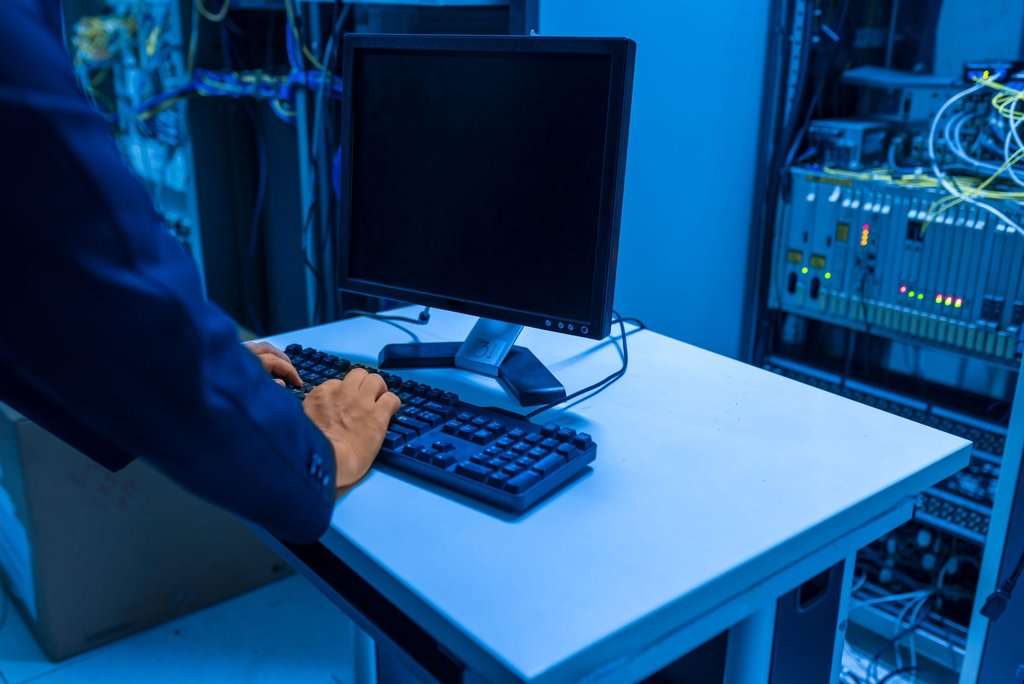
A technician at a terminal beside a rack of network equipment

How this plays out

A firm that could not say which of its machines were still reachable, or by whom

Three technicians over five years, each installing unattended agents wherever it was convenient, on a licence bought in a hurry and a personal account kept for the awkward cases. Two of the three had since left. The firm in this scenario did not object to paying for a remote tool. What they objected to was that a customer asked which of their machines were still reachable and by whom, and finding out honestly took most of a week.
A support agent taking a call at a laptop in a shared office

When this comes up

A firm where the remote session was never really the point

A customer calls, and then that call has to become a ticket, a session, a note against the right contact and a line on a report somebody bills from. On TeamViewer that is an integration somebody has to specify, build and maintain against whatever help desk you run. Inside Zoho it is one record moving through the suite, which is the whole reason three hundred a month is worth spending.
300

Dollars a month, published on this page, with the Zoho Assist licence inside it

Everything from the first read of how support really happens through to the monthly session reporting sits inside that figure. Unlike the rest of our Zoho work, we carry the Zoho Assist subscription ourselves and it arrives on the same invoice.
0

Dollars per technician, per endpoint, per session or per add on module

The review, the configuration, the access rules, the agent rollout and the reporting all sit inside the three hundred. Nothing is metered, there is no add on behind the setup and there is no tier above this one.
4-8

Weeks, usually, before support runs on the new setup without us in it

Four to eight weeks typically, and longer where years of ad hoc agents and personal accounts have to be found and retired before anybody will trust the access list.

TeamViewer alternative and managed Zoho Assist FAQs

Frequently Asked Questions

How does TeamViewer compare to AnyDesk, Splashtop and ScreenConnect?
It is the one you cannot price, and that is the most useful thing to know about it. The other three publish figures you can read today. A standard ScreenConnect concurrent technician licence runs around forty three dollars a month, and unattended access is sold separately by agent volume on top of that. Splashtop remote support starts around twenty two dollars a month per concurrent licence. AnyDesk runs from twenty eight ninety for one connection to a hundred and eleven ninety for two, with each further connection twenty nine ninety on top of that. TeamViewer publishes none of that. It is also the one whose window your customers already recognise, which is worth something no table captures.
Can I just buy TeamViewer online?
There is a checkout, but you will not see what it costs from the pricing page. The figures are drawn in by the browser after the fact, and on a plain load they are simply absent, which is why this page quotes no TeamViewer price anywhere. What does render is the commercial shape, and that shape's outline is simple. Annual billing, no monthly option, and automatic renewal for another twelve months unless you cancel at least twenty eight days before the term ends. Get the number in writing before you compare it to anything.
What does TeamViewer actually cost per month?
We do not know, and we are not going to invent one. The published prices do not render on a plain load of their own pricing page, and a comparison that makes up a figure is worse than one that admits the gap. What we can tell you is that the licence attaches to the expert rather than the endpoint, that billing is annual only, and that whatever the seat costs, Asset Management, Endpoint Protection, Device Monitoring, Assist AR Lite and Mobile Device Management are priced on top of it. Ask them, then come back and compare.
What does one TeamViewer licence actually cover?
One expert. The person giving support needs the licence and the person receiving it does not, which means a small help desk covers a large company cheaply. What it does not cover is the endpoint side of the catalogue, where the add on modules are metered by endpoints, by users or by storage depending on which one you take. Ask which meter applies to the thing you actually want before you model anything.
What sits outside the base TeamViewer licence?
Five things we can name, because they are listed as separately priced add ons: Asset Management, Endpoint Protection, Device Monitoring, Assist AR Lite and Mobile Device Management. Above the standard tiers sits Tensor, which is custom quoted, and its twenty four hour support commitment depends on holding a service agreement rather than arriving with the tier. The feature grid on their pricing page renders its row labels but not its ticks, so we will not claim anything about which tier includes what beyond that.
TeamViewer works out cheaper than three hundred a month for us. Why would I pay you?
Then take it, and we mean that. It almost certainly is cheaper, and so are the other three on this hub. A standard ScreenConnect technician licence is around forty three dollars a month and Splashtop remote support starts near twenty two. We are three hundred. That is several times the going rate for the software and we are not going to dress it up. You should not pay us for the software. You pay us because somebody has to decide who may reach what, deploy and retire the unattended agents, provision and remove technicians as people come and go, and wire the sessions into your help desk. If your team is happy owning that, keep your money.
At what point does a cheap seat licence stop being the cheaper answer?
Later than you would like, if you are only counting the invoice. Two ScreenConnect standard licences run around eighty six dollars a month, five AnyDesk Advanced connections around two hundred, and a dozen Splashtop support licences still lands under three hundred. On software alone we lose, and we lose by a lot. Where it turns is the hour count. If somebody in house spends half a day a month auditing access, chasing stale agents and rebuilding permissions after a leaver, the software saving is already gone. That is the honest arithmetic and we would rather you did it yourself than took our word for it.
Is TeamViewer remote support or remote access?
Both, and the distinction matters when you are pricing it. Attended support, where somebody is sitting at the machine and agrees to let you in, is a different problem from unattended access to a server at three in the morning. Every product on this hub does both and prices them differently, and ScreenConnect goes as far as selling unattended access as a wholly separate product billed by agent volume. Work out which one you actually need first, because it changes which tier you are comparing.
Is TeamViewer better at connecting than Zoho Assist?
Probably, and we are not going to pretend otherwise. Two decades of work has gone into getting a session through networks that fight back, across more platforms than anyone else supports. Zoho Assist connects perfectly well in ordinary conditions. If your support work routinely involves locked down networks, unusual operating systems or customers whose machines you have no control over, that difference is real and it is a reason to choose them over us.
Does Zoho Assist connect to the rest of Zoho?
That is the reason to choose it. Assist sits alongside Desk, CRM, Projects and People, so a support call becomes a ticket, a session, a note on the customer record and a line on a report without a connector holding the whole thing together.
What exactly do you do for three hundred a month?
We provision your technicians and remove them when they leave, deploy unattended agents on the machines that need them and retire the ones that do not, build the access groups and the session permissions, enforce your security and access policy, connect Assist to Zoho Desk and CRM so sessions land on tickets, produce the session reporting, and carry the Zoho Assist licence on our invoice. Technician support is unlimited and included.
Who holds the Zoho Assist licence, you or us?
We do, and this one is the exception across our Zoho work. On every other managed Zoho service you buy the licence direct from Zoho and we manage it. On Assist we carry the Zoho Assist subscription ourselves and it is billed inside the three hundred, on one invoice. Your session data and your configuration remain yours. Because there is a live subscription in our name rather than yours, leaving is a conversation about moving it rather than nothing to hand back, so ask us how that unwinds before you sign.
Can you move us off TeamViewer?
Yes, and the migration is mostly an audit. Technicians, groups, the machines carrying unattended agents and the access that should never have existed all get listed before anything moves, and we build the equivalent in Zoho Assist before you switch. The one thing to plan around is your renewal date. Annual terms roll over automatically unless you give at least twenty eight days notice, so tell us when yours ends and we will work backwards from it.
Is there a minimum term?
No. Three hundred a month, month to month, thirty days notice. That is a deliberate contrast with the alternative on this page, which is an annual term that renews itself unless you catch it twenty eight days out.
What if we only have two technicians?
Then buy two seats somewhere cheap and keep your three hundred dollars. Two technicians who know every machine they support and trust each other with the access list are not a problem worth paying anyone to manage. Come back when the third one joins, or when the first one leaves and nobody is certain what they could still reach.
What happens if we outgrow Zoho?
Some businesses do. Once support is one small part of manufacturing, field service or project delivery, the honest answer is ERPNext rather than another Zoho app, and we run that as well.
​Contact

Ask Us Anything

We’d love to hear from you!