














On Page Navigation

Managed Frappe HR for Payroll Leave Attendance

Frappe HR covers the whole employee lifecycle, from onboarding through leave, attendance, appraisals and payroll. Setting it up is mostly a series of decisions about your own policies, and that is the part where rollouts stall. We make those decisions with you, configure the system to match, move your existing records across, and stay on afterwards to run it with you. One flat monthly fee, no hours to count.


A Cascadia engineer reviewing a Frappe HR configuration

Built around the way HR actually runs

Where we differ from a standard HR rollout

Plenty of providers will install Frappe HR and hand you the login. That is the easy hour. What follows is leave accrual, holiday calendars, salary structures, the approval chains that route a request to the right manager, and the balance migration your staff will check on day one. Then there is the part nobody warns you about. After a bulk employee import, auto attendance marks nothing at all until somebody resets Process Attendance After and Last Sync of Checkins on the Shift Type. No error is raised anywhere. The scheduler runs on the hour and does nothing.

That specific failure is the shape of the whole category. Nothing is broken, no error is raised, and the system quietly does not do the thing everybody assumed it was doing. So we configure leave policy and accrual against your actual handbook, build salary structures and test them on real payroll before anyone is paid from them, migrate balances so staff can check their own numbers on day one, and then verify the scheduled jobs are genuinely running rather than trusting that they are.

Subscription versus one-off rollout

A subscription partner vs a one-off rollout

The usual way to get Frappe HR live is to hire somebody for an implementation project. They configure it, hand it over, and leave. Here is how that compares with a subscription where somebody stays responsible for it as your policies and your headcount change. The same arrangement covers the other Frappe apps we manage, so you are not holding a separate contract for each one.

Configuration keeps up

A project delivers the policy you had on the day it launched. Businesses change leave rules, add teams, and restructure pipelines. A subscription updates the configuration when that happens, so it does not go slowly wrong.

Adoption gets watched

A project ends before anybody knows whether the app stuck. Every month we look at what has gone quiet and where people have drifted back to spreadsheets. Whatever caused it gets fixed. Nobody gets a reminder.

No change order for small things

Under project billing, a report that is slightly wrong stays slightly wrong, because raising it means a change order. Those small annoyances are exactly what makes a team quietly stop trusting an app.

Training continues past launch

Implementation training happens once, for whoever happened to be there. New starters arrive all year. Sessions and recordings stay available here. They do not expire with the project.

Releases have an owner

A project ends and the system stops changing while the business carries on changing. Leave policy shifts in January, someone adds a department in March, and nobody left has the access or the context to reflect either one. Six months later there is a spreadsheet running alongside.

Nobody has to relearn your setup

A contractor spends their first week working out why your salary structures look the way they do, and bills you for it.

Built for teams putting HR on a real system

Who this service fits best

This suits businesses that have chosen Frappe HR and want somebody accountable for it, rather than a project that ends the week after go-live. If you are under about fifteen people and what you actually need is leave requests and a place to keep records, Zoho People does that for less money and far less configuration, and moving up to Frappe later is a normal path rather than an admission of failure. If you are still deciding between HR systems, say so before you commit. We would rather tell you now that it is the wrong fit.

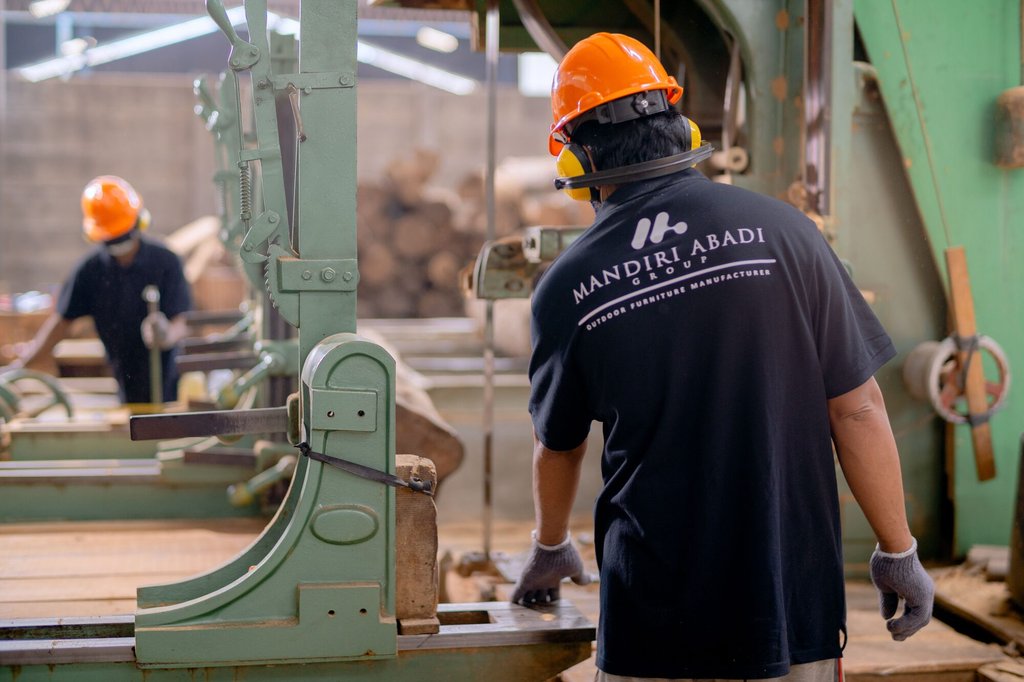
How we work with you

How the work runs

There is no big-bang launch. We work out which apps fit, configure one properly and get it adopted, then move to the next. You see something working every few weeks, and each app gets judged on its own before the next one starts.

1

We work out which apps you need

The first sessions are about your processes, not the software. What your team does today, where the friction is, and what you already run that an app would duplicate. You get a written recommendation on which apps to adopt, in what order, and which ones to skip for now. That plan is yours whether or not you continue with us.

2

We configure it against your real policies

We build your leave types, holiday calendar, salary structures and approval chains on a staging site, then load a copy of your real employee data into it. Your HR lead applies for leave, a manager approves it, and you look at the payslip that comes out of the other end. Nothing touches production until the numbers on that payslip are ones you recognise.

3

We launch, train, and review monthly

We roll the app out to one team first, train by role, and record the sessions. After that it becomes a rhythm. You send requests as they come up and we work them. Once a month you get a short summary of what changed and what has gone unused, with a suggestion of what to do next.

Transparent pricing for managed Frappe HR

Pricing

Managed Frappe HR
Standard

Standalone Service

$1,000.00
/per month, per instance
One active request at a time

DETAILS

One flat monthly subscription covering scoping, configuration, data migration, training, and the request queue after go-live. One active request at a time with a three to five business day turnaround. Anything broken in production jumps ahead of it. Hosting sits separately with Managed Frappe Cloud.

Managed Frappe HR
Priority

Standalone Service

$2,000.00
/per month, per instance
Two active requests at a time

DETAILS

Two active requests running in parallel instead of one, turnaround inside one to three business days, and a quarterly review of whether your configuration still matches how the business actually works.

Testimonials

Here's what others had to say

Everything we set up and support

Everything included in managed Frappe HR

This is the icon that represents an included managed service.Cascadia Web Services logo

Employee Records and Org Structure

Every person, with the fields your policies actually reference: employment type, grade, branch, department, designation, reporting line. The org chart draws itself from the reporting line once that is right, which is a good reason to get it right before anybody looks at it.
This is the icon that represents an included managed service.Cascadia Web Services logo

Leave Policy Configuration

Leave types, allocation rules, carry-forward limits, encashment, and the policy that binds them together. Earned leave is the one that catches people out, because it accrues on a schedule rather than landing in full on day one, and the rounding option you pick decides whether a half day exists at all. We set the policy, assign it against a leave period, and check the resulting balances against what your handbook says before anybody applies for anything.
This is the icon that represents an included managed service.Cascadia Web Services logo

Holiday Lists

Regional holidays pull in with one click. Your own closures do not, so we add them.
This is the icon that represents an included managed service.Cascadia Web Services logo

Attendance and Check-In

Auto Attendance reads Employee Checkin records and marks attendance against a shift, and it is quieter about failing than you would like. A check-in only maps if it falls inside the shift window once the grace settings on either end are taken into account, and the process ignores anything later than Last Sync of Checkins. Import a month of historical check-ins without resetting that field and Process Attendance After, and the scheduler runs every hour marking nothing at all. We configure both, run the process by hand, and reconcile a sample week against your old records.
This is the icon that represents an included managed service.Cascadia Web Services logo

Shift Management

Shift types, rosters, and the assignment rules underneath them. If you run more than one pattern, or people move between patterns, this is where that gets described once instead of in a spreadsheet somebody maintains by hand.
This is the icon that represents an included managed service.Cascadia Web Services logo

Payroll Setup

Payroll periods, salary components, income tax slabs, and the payroll settings that decide how working days are counted. That last one matters more than it sounds. Whether unmarked days count as present, and whether holidays falling inside a leave period are paid, both change what lands on a payslip. We put your answers in writing, configure to match, and run a parallel cycle against your last known-good payroll before you switch.
This is the icon that represents an included managed service.Cascadia Web Services logo

Salary Structures

One structure per grade or per employee group, with earnings and deductions built from your components rather than a sample file. Assignments carry an effective date, so a mid-year raise does not rewrite history.
This is the icon that represents an included managed service.Cascadia Web Services logo

Payroll Runs

We set up the Payroll Entry process and the bank entry that follows it, then stay with you through the first two live runs. After that most teams run it themselves in under an hour.
This is the icon that represents an included managed service.Cascadia Web Services logo

Tax and Statutory Deductions

Income tax slabs, exemption declarations, proof submission, and the salary components that carry them. Frappe HR ships a complete India payroll module covering professional tax, provident fund, employee state insurance and labour welfare fund. Outside India those structures are yours to define, and we define them with you rather than guessing at your jurisdiction.
This is the icon that represents an included managed service.Cascadia Web Services logo

Expense Claims and Advances

Employee advances, expense claims, and multi-level approval routing over both. Claims post into ERPNext accounting where you run ERPNext, so your finance team stops rekeying them.
This is the icon that represents an included managed service.Cascadia Web Services logo

Recruitment Pipeline

Staffing plans, job requisitions, openings, the public job portal, applicant tracking, interview rounds and feedback, offers, appointment letters, referrals. We turn on the parts you will use. A four-person company does not need a staffing plan and we will say so.
This is the icon that represents an included managed service.Cascadia Web Services logo

Onboarding and Separation

Templates that generate a real task list, assigned to real people, on dates that follow from a start date. Exit interviews and the full and final statement sit at the other end of the same machinery. Most of the value here is that nobody has to remember the sequence.
This is the icon that represents an included managed service.Cascadia Web Services logo

Appraisal Cycles and Goals

Appraisal templates weighted by key result area, cycles that open and close on set dates, self-evaluation, and manager feedback. Goals link back to the KRAs so a review has something underneath it. Configuring this takes an afternoon. Agreeing what you actually measure people on takes considerably longer, and we will sit in that conversation if it helps.
This is the icon that represents an included managed service.Cascadia Web Services logo

Mobile App Rollout

Leave requests, approvals, check-in with geolocation capture, and the employee profile. We set up push notifications and get it onto phones.
This is the icon that represents an included managed service.Cascadia Web Services logo

Approvers and Permissions

Who approves leave for whom, who can see salary, and who sees only their own record. Frappe HR supports leave approvers set per employee, set per department, and derived from the reporting hierarchy through user permissions, and those three mechanisms can quietly disagree with each other. We map yours to your real authority levels and write down which mechanism is doing the work, because whoever changes it next will need to know.
This is the icon that represents an included managed service.Cascadia Web Services logo

Data Migration

Employees, leave balances, salary history, open claims. Balances are the delicate part, because they have to arrive as ledger entries that reconcile rather than as a number typed into a field. Everything loads into a test site first and we compare totals with you before production sees any of it.
This is the icon that represents an included managed service.Cascadia Web Services logo

Print Formats

Offer letters, appointment letters, payslips, appraisal summaries. Built to look like your organisation.
This is the icon that represents an included managed service.Cascadia Web Services logo

Reports and Dashboards

Headcount, attrition, leave liability, attendance exceptions, and the employee CTC break-up your finance team asks for at year end. We build what your managers check weekly and put it on the workspace they already land on.
This is the icon that represents an included managed service.Cascadia Web Services logo

ERPNext Connection

Where you run ERPNext, payroll posts straight to your accounts, expense claims reach the same ledger, and timesheets can drive a payroll entry. One database underneath, so this is configuration work rather than an integration project.
This is the icon that represents an included managed service.Cascadia Web Services logo

Ongoing Support and Review

Requests come in through the subscription: a new leave type, a changed approver, a report, a print format that needs a clause added. Production problems go to the front of the queue. Once a quarter we check whether the configuration still matches how you work, because policies change more often than anybody remembers to update the system.

Questions we get asked most

Frequently asked questions
Do we need ERPNext to run Frappe HR?
No. Frappe HR runs standalone and plenty of clients use it that way, usually because their accounting already lives somewhere they are happy with. What you give up is payroll posting into your accounts automatically, so journal entries become an export and an import. If you do run ERPNext, the two share a database and that step disappears.
How long does an implementation take?
Six to ten weeks for a typical rollout, and the software is rarely what sets the pace. Leave policy, salary structure, and approval authority are all decisions your side has to make. Attendance and leave on their own, with payroll left for later, can be live in about three weeks.
Can you run payroll for us?
No. We configure it, test it against your last known-good cycle, and stay with you for the first two live runs. Pressing the button stays with you, because payroll is your legal obligation and it belongs with somebody inside your organisation.
Does Frappe HR handle US payroll taxes?
Not out of the box. The statutory modules that ship complete are the Indian ones. For a US payroll we build salary components and tax slabs to match your situation, and most clients keep a bureau or a filing service for the returns while Frappe HR holds the structures and produces the payslips. If your only requirement is federal and state filing with no HR system attached, a dedicated payroll provider is the better buy and we will tell you that on the first call rather than sell you this.
What does the price include?
Implementation, configuration, data migration, training, and the request queue afterwards. One flat monthly figure rather than a quote per change. Hosting is separate.
Is hosting included?
No. Managed Frappe Cloud covers hosting and the two appear on one invoice if you take both. If you are already hosted, whether on Frappe Cloud or your own infrastructure, we work inside your environment and coordinate upgrade windows with whoever runs it.
What is the difference between Standard and Priority?
Standard runs one active request at a time. Priority runs two in parallel, turns work around faster, and adds a quarterly review session. Production problems jump the queue on both tiers. Rolling out payroll is the usual reason to take Priority for a few months and then step back down.
Can you take over an installation somebody else set up?
Yes. We start by reading the configuration rather than changing it: leave policies and their assignments, salary structures and effective dates, permission rules, and anything that has been customized. You get that written up with a recommended order of work. Inherited HR systems tend to carry one or two settings that are wrong in a way nobody has noticed, because the consequence only surfaces at year end.
Our attendance never marks properly. Can you fix it?
Usually, and usually it is the same two fields. Auto Attendance ignores check-ins later than Last Sync of Checkins and marks nothing dated before Process Attendance After, so a historical import can sit in the database and never get processed while the hourly scheduler reports no errors at all. The other common cause is check-in times falling outside the shift window once the grace settings are counted. We check both before assuming anything is actually broken.
Do you do custom development?
Configuration is included, and that covers more than people expect: custom fields, form layouts, print formats, reports, workflows, notifications. Writing a new app, or code that changes how Frappe HR behaves internally, is separate work and gets quoted. We tell you which side of the line a request falls on before starting it.
How do you handle upgrades?
Frappe HR releases on its own schedule and we track it. A release gets checked against your customizations and your print formats on a test site before it reaches you, and the window is agreed with you rather than picked for you. If your hosting is Managed Frappe Cloud we carry out the upgrade. If somebody else hosts you, we work with them on timing.
Can employees use it on their phones?
Yes. The mobile app covers leave requests and approvals, check-in and check-out with geolocation capture, and the employee profile. It is the part most of your staff will ever see, so we set up push notifications and roll it out deliberately rather than leaving people to discover it.
What happens to our existing leave balances?
They come across as leave ledger entries so the arithmetic reconciles, not as a number written into a field. We load them into a test site, compare the resulting balances against your current figures employee by employee, and only then touch production. Balances that disagree after go-live are unpleasant to unpick and the unpicking always happens in front of the affected employee.
Is there a minimum term?
No minimum term and no setup fee. Billing is monthly and thirty days notice ends it. If a migration is unusually large we quote that part separately and say so before you subscribe.
Who owns the system if we stop working with you?
You do, entirely. Frappe HR is open source, the instance is yours, and every configuration we build lives inside it. The documentation is yours as well. There is no layer of ours in the middle that stops working when the invoices do.
​Contact

Ask Us Anything

We’d love to hear from you!